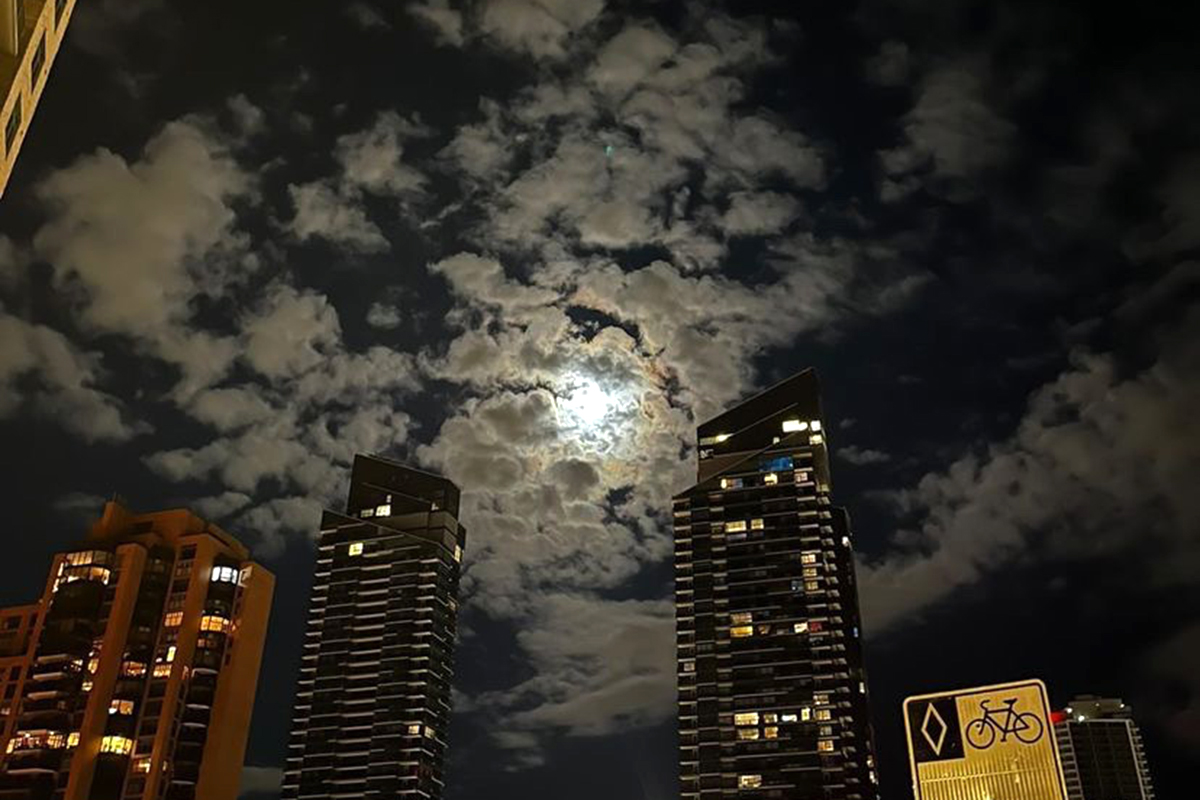
This is a picture of the moon taken in Downtown Calgary. The moon has eight distinct phases, which are reliant on how far into the lunar cycle the moon is. Lunar cycles last about 29.5 days, and measure the amount of time between a full moon and a new moon.
In order to ensure a sustainable future for the life of Earth, it’s important to look outwards. World Space Week is a global event declared in 1999, celebrating advancements in science and technology every year in relation to space exploration. The event is celebrated October 4-10, and aims to attract public attention towards the importance of space technology and exploration as a means to improve life on Earth.
Why it’s important
World Space Week is conducted by the United Nations with support from the World Space Week Association (WSWA), who coordinate teams globally to promote the event’s celebration across the world. It serves as a way to educate the public about outer space by informing people about space travel, technology, programs, and the various benefits we get from outer space. The event falls on October 4-10 every year, commemorating two important dates in the history of space:
- Oct. 4, 1957: The launch of “Sputnik 1,” the first artificial satellite launched into low orbit by humans, igniting global interest in space travel
- Oct. 10, 1967: The Treaty on Principles Governing the Activities of States in the Exploration and Peaceful Uses of Outer Space was signed, with a goal of making space exploration free of national appropriation
Goals
With the rapid advancement of modern space technology, many issues on Earth, including climate change, pollution, and agricultural challenges, can be observed and addressed through the use of space technology, such as satellites. World Space Week aims to emphasize to the public the importance of utilizing what’s outside of Earth’s atmosphere for the betterment of our planet.

Comments