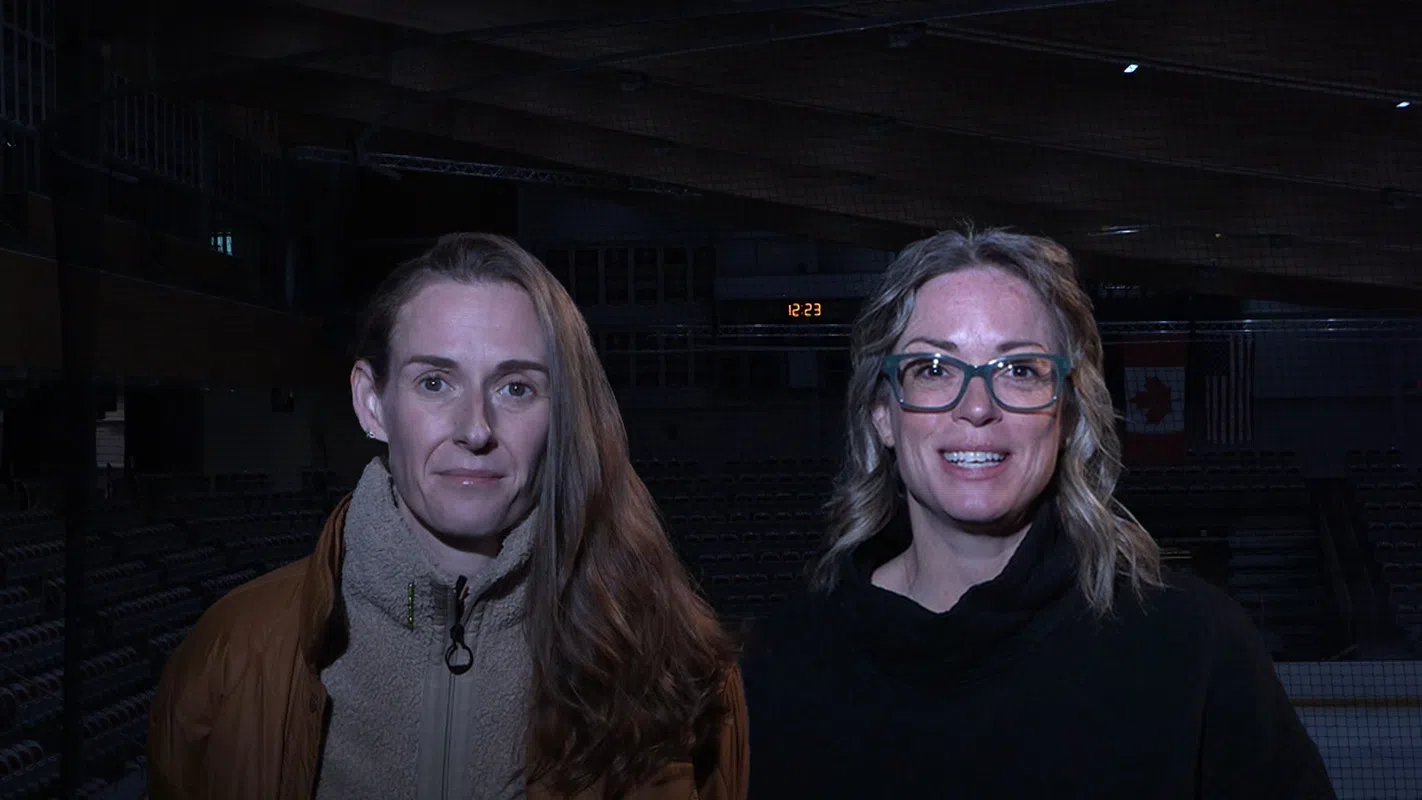
Jessica Renney and Paula McQuaid are the co-founders of the mental health organization HONE Athletics that specializes in guiding young athletes on their process.
HONE began working in the community in 2013 when they began working with an Okotoks-based hockey program, Peak Athletics, under their original name Mindful Athletics.
“The willingness of these young boys to share was very inspiring,” says Renney. “But I think back to the safe space that was created for them, we did not have to dig into them to get the information, we just created a shared circle everyone was comfortable in.”
Jessica Renney is one of the co-founders of HONE Athletics, a mental health organization that focuses on helping young athletes navigate their sport and any stresses that may stem from it. (Adam Vyse, CMRU.ca)
Since the Peak Athletic days, the two have worked together on one common goal, reshape the way coaches, parents, and the athletes process mental health.
McQuaid says, “Kids have a tough time these days dealing with stresses from social media, school, friends, and we are just trying to give people the tools they need to get help.”
McQuaid also listed a multitude of elements that can force a young athlete to become disinterested from their sport:
- School
- Parents
- Friends/Bullies
- Locker Room Issues
- Unfair/Abusive Coaches
- Time Consuming/Too Busy
Paula McQuaid is one of the co-founders of HONE Athletics, a mental health organization that focuses on helping young athletes navigate their sport and any stresses that may stem from it. (Adam Vyse, CMRU.ca)
Good coaches are hard to come by
Have you ever watched a group of ducklings following Momma duck down a steep river bank?
The ducklings will essentially hurl themselves down, from their tiny perspectives, cliffs because mom did — which is very similar to how youth athletes will follow the attitudes of their coaches.
Personally, I have had coaches who are actively involved in bettering our mental health, or providing resources for us if needed, and have had other coaches who told us “he is giving up on us” with a month to go in a season.
Now, considering it was just about the end of February and the team last won a game in the middle of October but having a coach actually say he was giving up was a first.
It should surprise no one that we would end up losing the remaining games of the season and ended up with only four wins on the season and the most penalty minutes— in a 40 game season we managed over 1,000 minutes of penalties (approximately 25 minutes in penalties a game).
On the other hand, growing up my dad was my hockey coach for two years and was so beloved that other kids on the team would actually call him “dad,” and not coach.
The role of the coach extends beyond the X’s and O’s, the defensive/offensive schemes, and any tactical decision—a coach’s role extends into being a supportive individual to players that were selected for a team.
For those familiar with auto racing, how can teams be expected to win a race if the engine of the car is running at 50 per cent—how can coaches expect to win if they are unaware their players have 50 per cent brain capacity because they are bringing some extra baggage that day.
Unpacking the baggage with HONE
The app HONE offers gives an approach that entices both the athletes and the coaches to participate in check-ups to ensure each athlete is properly cared for.
HONE’s powerful database has three access ports:
- Coach’s Computer/Laptop can access the HUB
- Players cell phones will give the access to weekly prompts and relevant resources
- A organizational dashboard accessible by HONE to monitor progress
All data collected is encrypted and can only be found by the coaches, HONE does not centralize a data collection.
The co-founders are adamant that the best reviews they hear are not necessarily from the players but from the coaches of the teams.
Coaches have expressed they had never understood the total impact mental health has on players and finally understand the role and impact coaches have.
The mental health of a team begins and ends with a coach, especially in youth sports.
An honest review of HONE
Now, I am well aware of the supportive tone this blog has towards HONE, but that is actually because I am one of the original Peak Athletics members.
To say these two women are exceptional human beings and are committed to their job is an understatement, from the very jump back in 2014 the ladies have given so much time and energy to us young athletes it’s hard to comprehend.
Twice a month they would drive into town to Okotoks, and 25 or so young boys would sit in a circle and for two hours would listen to Renney and McQuaid.
What I remember most, would be sitting around and having deep conversations about potential stresses, what deeper emotions may result from that stress and what it can manifest into.
Essentially, they would teach us about the emotions we were feeling and how we can circumvent them to get the most out of each day.
One fateful session we were asked to share what we would do to alleviate feelings of stress, when it came to me in the share circle I felt secure and open to reveal I took candle lit bathes to relax.
Now, I may have been called “bubble boy,” or “bath boy,” for the rest of grade eight, but from that moment the two helped me understand why sharing was so important to me.
Renney and McQuaid were adamant to block out the noise and realize how vital it was that I had recognized a de-stresser at such an early age.
From then on, I have felt quite comfortable sharing how I feel and have basically institutionalized a stress-release mechanism with the help of Renney and McQuaid.
Renney and McQuaid have been instrumental in my development and after interviewing them, and hearing how much the original Peak Athletics group was to them, it seems we were just as important to them.
Personal reflection
The community partner project has been very rewarding for me, because it allowed me to reconnect with some important figures in my life!
I had bumped into Paula this past summer while running the audio director for a friend’s podcast this summer.
However, this project was the first time I got to see Paula and Jessica since I was a wee lad, honestly it was getting close to a decade seeing as I’m now 24…
Furthermore, it was really quite refreshing and important for me to tell these two women how much they have impacted my life for the better.
I find it really easy to express emotions and connect with people emotionally, which is something that was taught in our many shared circles.
One of the big elements Peak and Mindful Athletics wanted us young boys to learn was empathy, putting yourselves in others shoes.
Again, is another important life skill, which in my opinion, is not taught to everyone or some people missed that lesson.
Needless to say, I cannot thank them enough for teaching me tangible life skills and for being adults in my life (that are not blood related) to never give up on me.
I’d hate to pump their tires too much, but in all honesty that was my motivation for reaching out to them and trying to give back to them as much and as often as I can.
Not too many people are chomping at the bit to get working on mental health, let alone the minefield that is youth sports.
But, if someone’s going to do it, then we should all count our lucky stars that people as kind, considerate, and knowledgeable as Jessica Renney and Paula McQuaid have dedicated their lives to helping the youth.

Comments